Beyond the Warning Lights: Reading Your MINI's Hidden Live-Data Menu
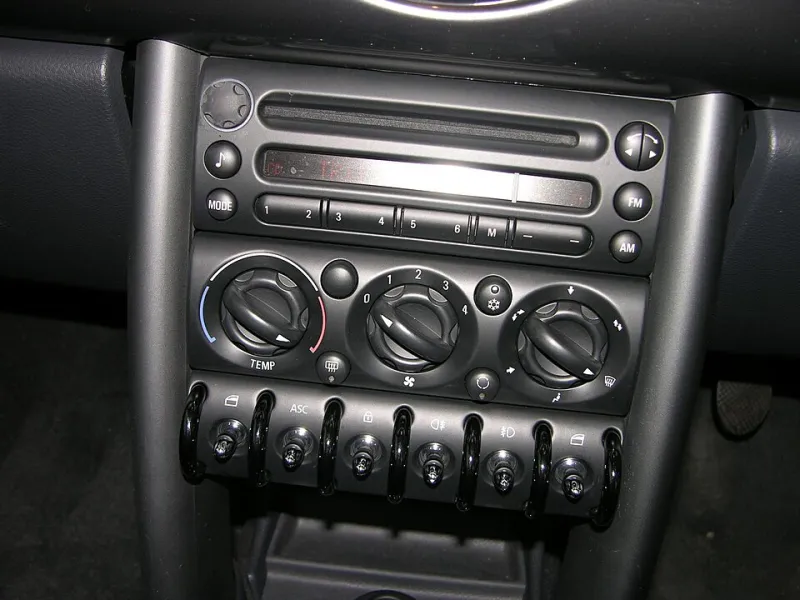
Photo: The Car Spy, CC BY 2.0, via Wikimedia Commons
Picture the scene: you've got a 400-mile run to the Highlands booked, the bags are packed, and the only thing standing between you and a decent breakfast stop is a quiet worry about whether the car is really up for it. Warning lights are binary — on or off — but your MINI often has a richer stream of information tucked away behind the dashboard. It won't replace a proper service, and it won't read fault codes, but it can give you a useful snapshot before a long journey.
What the hidden readout actually is
On many MINI models — particularly cars from the R56 and F56 eras, though availability varies — the instrument cluster has a diagnostic or service menu that cycles through live figures. Think of it as a backstage pass to the sensors the car is already monitoring. You're not unlocking extra power or rewriting software; you're just asking the dashboard to show its working.
Access methods differ by model and year. On some cars you hold the trip-reset button while the ignition is on; on others it's a combination of stalk presses. Some newer MINIs keep certain functions behind the scenes entirely. The golden rule is simple: if the procedure in your owner's handbook doesn't match what you're seeing on screen, stop. There's no prize for guessing, and there's certainly no prize for accidentally changing a setting you can't undo.
Seven figures that earn their keep
Assuming your car exposes them, these are the numbers worth a glance before a big trip. Treat them as clues, not verdicts.
1. Battery voltage
A resting battery in decent health typically sits somewhere around 12.4 to 12.7 volts. With the engine running, you should see charging voltage in the mid-to-high 13s or low 14s. If the resting figure is sagging into the low 12s — or lower — a cold morning and a long motorway stint could be the final straw. Modern MINIs are electrically hungry, and a weak battery can cause all manner of odd behaviour before it finally gives up.
2. Coolant temperature
Once warmed through, most MINI engines settle in the 80–100°C bracket. What you're looking for is stability, not an exact number. A reading that never gets warm could point to a sticking thermostat; one that climbs under load deserves investigation. On a long climb through the Pennines, this is a figure you'll be glad you checked.
3. Oil temperature
Not every MINI displays it, but where it's available, oil temperature gives a better picture of workload than coolant alone. Normal running often lands around 90–110°C. If it's tracking much higher on a gentle cruise, that's a conversation for a technician rather than a forum thread.
4. Fuel level sensor data
Dual-sender fuel tanks can sometimes give an erratic gauge reading. The live data can show what each sender is reporting, which helps explain a gauge that sulks at three-quarters for 100 miles and then drops like a stone. It's not a fix, but it's useful context if you've ever wondered whether your MINI's fuel gauge is optimistic or just dramatic.
5. Ambient temperature reading
The outside temperature sensor lives near the front bumper on many models, where it's exposed to road spray and heat soak. Comparing it with a weather app before a winter drive is a quick sanity check. If it's reading wildly wrong, it can affect everything from climate control logic to cold-start behaviour.
6. Speed signal
A live speed readout can be compared with GPS or a sat-nav. A small discrepancy is normal — speedometers are often calibrated slightly optimistic — but a wild difference could point to a wheel-speed sensor on the way out. That's the sort of thing you'd rather discover in your driveway than on the hard shoulder of the M6.
7. Service interval and condition-based service data
Many MINIs hold service countdown information in the cluster or iDrive menus. Before a long trip, confirm the next service isn't due in 300 miles when you're planning to be 500 miles from home. It's basic diary management, but it saves a scramble.
How to bring it up without poking the bear
The exact sequence varies, so check your handbook or ask our workshop team if you're unsure. Broadly, you're looking at ignition on, engine off for some readouts, and engine running for others. Cycle through the available screens using the trip button or stalk, and resist the urge to enter any menu that asks you to confirm a change. You're there to observe, not to recode.
If your MINI has a digital cluster, some of this information may already be available through the normal menus without any hidden-button gymnastics. Start there first — it's less fiddly and entirely within the car's intended user interface.
What it won't tell you
This is the important bit. A hidden readout is a health check, not a service substitute. It won't tell you the condition of your brake pads, the tread depth on your tyres, or whether your oil is due a change. It won't flag a failing thermostat before the numbers drift, and it won't replace a proper diagnostic scan if a fault code is stored. Use it as a pre-flight ritual, not a maintenance plan.
When to call in the experts
If a figure looks off — a battery that won't hold charge, a coolant temperature that behaves strangely, a speed signal that doesn't match reality — book a health check with Peter Vardy MINI. We see plenty of cars before staycations and long weekends away, and a quick once-over is cheaper than a recovery truck. Our technicians can read the full picture, not just the highlights.
The pre-trip ritual
A long drive is better with a little knowledge in your pocket. Check the obvious things first — tyre pressures, oil level, washer fluid — then let the dashboard tell you the rest. Your MINI already knows more than it lets on. You just need to know where to look.