Signal Over Shine: The Twenty-Minute Route That Exposes a Used MINI
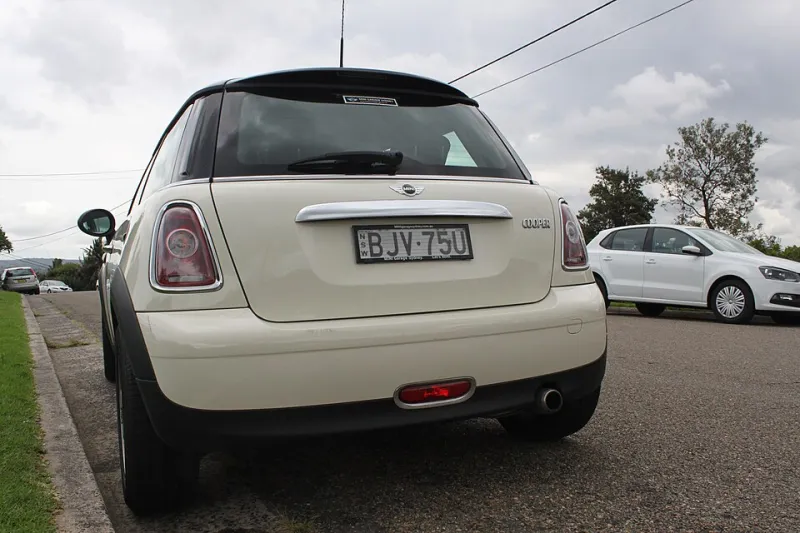
Photo: Jeremy from Sydney, Australia, CC BY 2.0, via Wikimedia Commons
A used MINI can look immaculate under forecourt lighting and still feel wrong at 30 mph over a patchwork repair. The answer is not a longer drive. It is a smarter one. Twenty minutes on a route you have chosen, repeated in every car you consider, gives you a baseline. You stop comparing shiny things and start comparing signals.
This is not about hunting for faults with a clipboard. It is about driving the way you actually will: town streets, a stretch of A-road, and a car park that demands a proper three-point turn. Set the loop before you leave the dealership, drive it in the same order each time, and the differences between cars become obvious.
Plan the loop before you turn the key
Ask the sales team for a route that includes a residential grid, a national-speed-limit A-road and a busy retail car park. Most will oblige. If they suggest a straight dual carriageway and back, politely counter-propose. You need junctions, kerbs, cambers and a tight bay — not a motorway cruise that hides everything.
Before setting off, adjust the seat, wheel and mirrors properly. A MINI's upright glass and thick pillars reward a good driving position. If you cannot get comfortable in the first two minutes, that is already useful information. Note the mileage, check the tyre pressures later if you can, and make sure the fuel light is not on so you are not distracted.
Town streets: the honesty test
The first five minutes should be slow. Residential roads expose the things a fast drive masks: clutch bite, low-speed steering weight, brake pedal travel and the way the car copes with broken tarmac. In a manual MINI, pull away gently from a few junctions. The clutch should engage smoothly, not snatch or judder. In an automatic, creep forward and stop repeatedly. A dual-clutch or torque-converter box should shuffle between first and second without a lurch.
Listen with the windows down for the first minute. You are not expecting silence — MINIs are not limousines — but you are listening for irregularity. A rhythmic click that rises with speed can be a CV joint. A hollow knock over speed cushions can point to worn bushes or drop links. A whine that follows engine revs rather than road speed is worth noting. Do not diagnose on the spot; just record what you hear and where.
Use the mirrors and pillars deliberately. Pull out of a tight T-junction and check the over-the-shoulder view. The three-door MINI's rear quarters are chunky, and the Clubman and Countryman have their own blind spots. If visibility feels genuinely awkward, ask yourself whether you can live with it daily.
The A-road stretch: engine, gearbox and steering
Once the tyres are warm, join a proper A-road and build speed progressively. You are assessing three things: how the engine delivers power, how the gearbox chooses gears, and whether the steering tells you what the front tyres are doing.
In a Cooper or Cooper S, the engine should pull cleanly from low revs without hesitation or flat spots. If it is a turbocharged petrol, listen for a faint whistle that turns into a rattle under load — that is a conversation for a technician, not a negotiation tactic. Diesel models should be smooth when warm; a persistent clatter or blue smoke is a red flag.
Run through the gears manually if the car allows it. The shift should be positive, not vague or crunchy. In an automatic, use the paddles or the gear lever to hold a gear and feel for smooth engagement. A gearbox that thumps into gear under light throttle is telling you something.
Find a straight, quiet section and gently weave within your lane. The steering should self-centre predictably and the car should settle quickly. A MINI feels darty by design, but it should not wander or require constant correction. Over broken surfaces, listen for rattles from the dashboard, door cards and rear parcel shelf. Some are easy fixes; some are clues to past trim removal.
The car park concourse: tight-parking reality check
A busy retail car park is not glamorous, but it is where many MINI owners spend their Saturdays. Use it properly. Reverse into a bay between two cars. Check the door mirrors, the rear camera if fitted, and the parking sensors. Do they beep at a sensible distance, or are they over-sensitive? Does the camera image stay clear in low light?
Then perform a three-point turn in an empty corner. This reveals the turning circle, the steering lock and how the car behaves at full lock. A MINI should feel compact and eager here. If the steering groans at full lock, note it — it may be a pump or belt issue on older cars.
While parked, do a static check. Open and close every door. Check the boot floor for damp and the spare wheel well if accessible. Look at the tyre sidewalls for kerb damage and the alloy rims for buckling. Run your hand over the front wings and bonnet for overspray or uneven panel gaps. These are not driving signals, but they are part of the same twenty-minute verdict.
Infotainment and visibility: the daily-use checks
Before you drive back, pair your phone. It takes thirty seconds and tells you whether the Bluetooth, USB and voice controls work. In newer MINIs, check the central screen for lag or dead pixels. In older cars, make sure the radio preset and aux input behave. You will use these every day; a glowing forecourt photo will not.
Adjust the climate controls, heated seats and demister. A MINI's windscreen is upright, and a weak blower or failed heated rear screen is annoying in November. Check the wipers park correctly and do not smear. These are small things that add up.
The debrief: what you are actually comparing
When you hand the key back, do not rely on memory. Write down three things: what you heard, what you felt through the controls, and what you would want a technician to inspect. A repeatable route means you can compare notes across different cars and different dealerships.
At Peter Vardy MINI, we would rather you drive a car properly and ask hard questions than fall for a gleaming bonnet. A twenty-minute loop will not replace a full inspection, but it will tell you whether a used MINI has genuine character or just a fresh valet. Trust the signals, not the shine.