Kerb Appeal: Making an Electric MINI Work When You Park on the Street
Plenty of UK drivers fancy an electric MINI until they look out of the window and remember that their only parking space is a strip of tarmac shared with the neighbours. Terraced streets, flats above shops and Victorian suburbs were not designed around charging cables. Yet street parking does not automatically rule out an electric MINI. It simply asks you to be a bit more organised than someone with a driveway and a home charger.
Start with the street, not the car
Before you get attached to a particular Cooper E, do a little local homework. Check your council’s website for on-street charging plans, resident permit schemes and any lamppost charging trials. Look at Zapmap or your preferred charging app and search around your postcode, then around your workplace. A charge point half a mile away is useful; one that is always occupied by a diesel van is less so.
It also helps to think beyond your own front door. Does your supermarket have reliable chargers? Is there a car park near the station with overnight options? Does your employer offer workplace charging? Street-parked EV ownership often works best when you stop thinking of charging as one big weekly event and start treating it as a series of small opportunities.
The on-street options, without the jargon
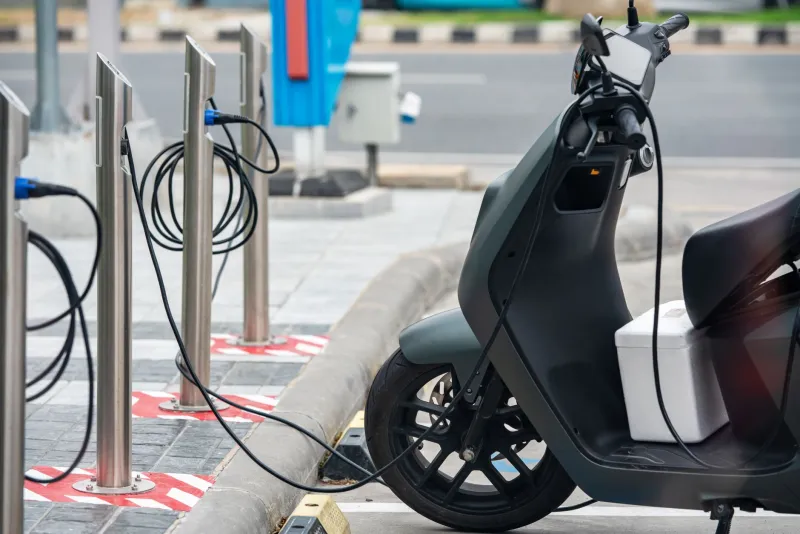
There are several ways councils and operators are tackling charging for people without drives. Lamppost charging uses adapted street lights and is ideal for overnight top-ups where the infrastructure allows it. Dedicated on-street charge points, often bollard-style, may be installed in residential bays. Some councils run permit schemes that reserve charging bays for residents, while others allow cross-pavement cable channels or gullies where a cable can run safely from a house to a car.
The important word is ‘some’. Rules vary enormously between local authorities, and a solution that is routine in one borough may be refused in the next. Never assume you can run a cable across the pavement just because a neighbour does. Ask the council first, get any permission in writing, and check whether your property is suitable. If you rent, speak to your landlord as well.
Cable crossing: safety first, shortcuts never
A charging cable draped across a pavement is a trip hazard, a wheelchair obstacle and a fine waiting to happen. If your council permits cross-pavement charging, use proper cable protection such as a ramp or mat, keep the route as short and direct as possible, and never block tactile paving or a dropped kerb. The cable should be suitable for outdoor use, connected to a proper EV charging unit rather than a domestic extension lead, and protected by the right safety devices.
Do not daisy-chain extension leads, do not run cables through standing water, and do not leave a connector lying on the pavement where it can be kicked or soaked. In 2026, many public and shared chargers handle the safety side for you, which is one reason they are often the simpler choice for street parkers. If in doubt, treat the pavement as a public highway first and a personal charging route second.
What it actually costs
This is where the no-driveway life needs a clear head. Home charging on a cheap overnight EV tariff can be remarkably low, but if you cannot plug in at home you will lean more heavily on public infrastructure. Costs vary by operator, council and speed, so always check the app before you plug in.
As a broad guide, slower on-street or destination charging tends to sit somewhere between home electricity and rapid charging. Rapid chargers are the most convenient and usually the priciest. For a MINI Cooper E doing around 150 miles a week, the difference is noticeable. At roughly 3.5 miles per kWh, that is about 43 kWh of electricity. Cheap home charging might cost a few pounds; public street charging might land in the mid-teens; a rapid-heavy week could easily double that.
The trick is not to chase the cheapest kilowatt at all costs. A reliable lamppost charger near your front door may be worth more than a slightly cheaper unit across town. Mixing overnight street charging with occasional destination charging usually keeps both costs and stress sensible.
A commuter week in a Cooper E
The MINI Cooper E is a city-sized electric hatch with a usable battery and a range that suits realistic British driving rather than fantasy test-cycle numbers. In mild weather, many owners will see a real-world range comfortably into the 140 to 170-mile region depending on route, speed and driving style. A 30-mile daily round commute is therefore not a charging emergency; it is a weekly top-up or two.
A typical week might look like this: a couple of overnight sessions on a local lamppost or on-street point, one top-up while doing the weekly shop, and perhaps a rapid stop only if a longer weekend trip appears. The MINI app helps here, letting you check charge status and pre-condition the cabin while the car is still plugged in. That last point matters more in winter.
The cold-weather caveat
Electric cars lose range in the cold. That is chemistry, not a MINI-specific flaw, and it applies to every EV on a frosty morning. Expect a noticeable drop in winter, especially on short journeys where the cabin and battery are constantly being warmed from cold. Pre-conditioning while plugged in, using heated seats rather than blasting the cabin heat, and allowing a little more charging margin will all help.
For street parkers, winter also means being realistic about cable handling in wet weather and not leaving a charging session to the last possible moment. A little planning in November saves a lot of standing around in January.
The verdict for street parkers
An electric MINI can absolutely work without a driveway, but it is not a decision to make on style alone. Check your council’s rules, map your regular charging options, budget for public electricity rather than home-tariff prices, and be honest about how often you can leave the car plugged in overnight. Do that, and the lack of a driveway becomes an inconvenience rather than a deal-breaker. The Cooper E is still a MINI at heart: compact, cheerful and well suited to British streets. It just needs a charging plan that is as tidy as its parking.