Making Your MINI a Moving Target: Practical Keyless Security for UK Owners
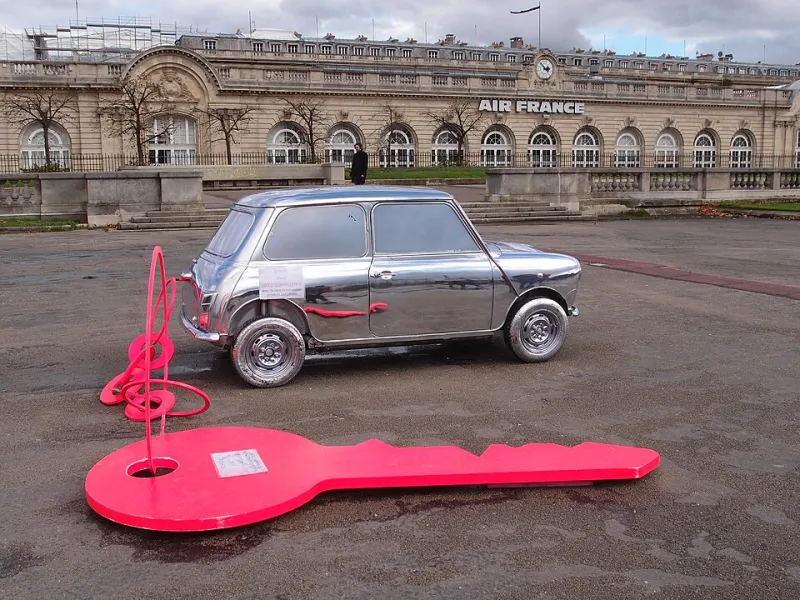
Photo: Guilhem Vellut from Annecy, France, CC BY 2.0, via Wikimedia Commons
Keyless entry and push-button start have become background noise on modern MINIs. You walk up, the car unlocks, you press the button and go. It is convenient, and it is also why relay theft keeps cropping up in conversations at forecourts and on owner forums. The good news is that a few sensible layers make your MINI a much less appealing target. No single gadget guarantees anything, but you do not need a fortress—just enough friction to send an opportunist to the next car.
How relay theft actually works
Relay theft is less Hollywood than it sounds. Two thieves typically work as a pair: one stands near your house with a device that picks up the signal from your key fob, and the other stands near the car with a device that relays that signal. The car is fooled into thinking the key is right there, so it unlocks and starts. Nothing is smashed, no window is broken, and the whole thing can be over in under a minute.
The important detail is that the fob has to be transmitting. Many modern fobs go to sleep when they have been still for a while, which makes the attack harder. Older fobs, or fobs that are constantly moved around near a front door, are more exposed. That is why a key hung on a hook by the front door is the classic weak point—it is close to the car, easy to relay and usually in motion when someone comes home.
Which MINIs and key systems are in the frame
Any car with keyless entry and keyless start can be targeted. On MINI, that means examples with Comfort Access and push-button start across the F56 Hatch, F55 five-door, F54 Clubman and F60 Countryman families, plus newer models. Cars with a conventional remote that you click to unlock are not immune to other theft methods, but they are not the classic relay target.
The latest MINIs have improved key sleep behaviour and, depending on specification, more advanced signal protection. Older keyless cars deserve the most attention—not because they are bad cars, but because a fob that keeps chatting is easier to relay. If you are unsure what your MINI has, check the specification or ask your local Peter Vardy MINI team to confirm.
Start with the key, not the car
A Faraday pouch is the simplest first step. It is a small lined pouch that blocks the fob’s signal. The cheap ones can lose effectiveness as the lining wears, so test yours properly: put the fob inside, stand next to the car and pull the door handle. If the car opens, the pouch is not doing its job.
Use the pouch at home, and secure the spare key in one too. Do not store keys in a microwave or a metal biscuit tin and assume you are covered—those myths circulate every winter. A proper pouch, kept away from doors and windows, is a far more reliable habit. If your MINI has keyless entry, make the pouch part of your routine the same way you would lock the front door.
Visible deterrents still work
Thieves prefer easy. A bright steering wheel lock is a visual signal that your car is not the quickest option on the street. It will not stop a determined professional with unlimited time, but it adds a step, noise and delay. An OBD port lock is another useful layer: it prevents access to the diagnostic socket that can be used to programme a new key.
If you go down this route, choose dealer-fit or approved aftermarket products rather than a mystery online special. Peter Vardy MINI can talk through genuine accessories and approved security options that suit your model without interfering with the car’s systems.
Tracking and insurance
A tracker is not a substitute for physical security, but it is a strong back-up. Look for a Thatcham-approved system fitted by a recognised installer, and keep the paperwork. Tell your insurer—some policies ask for a tracker on higher-value cars, while others offer a discount. Do not assume; call and ask what they need to see.
It is also worth checking whether your policy has any specific requirements around keyless cars. Some insurers ask about overnight parking, others want proof of a tracker or an approved immobiliser. A five-minute call now can save a difficult conversation later.
Parking tactics that cost nothing
Where you leave the car matters. A garage, a driveway or a well-lit street is better than a quiet corner. If you have two cars, park the less desirable one behind the MINI. If you have a driveway, park nose-in so the car is harder to drag away. Motion-sensitive lights and a visible camera are useful deterrents, even if they are not foolproof.
At public car parks, choose busy, well-lit areas rather than the quiet top deck. Do not leave documents or valuables on display. These are old-fashioned habits, but they still work because they make your car look like more effort than the one two rows over.
A realistic routine
You do not need to turn your home into a security compound. A sensible routine looks like this: fob in a tested Faraday pouch at home, spare key secured, steering lock on overnight if your area has seen relay theft, tracker if you plan to keep the car long-term, and parking that avoids obvious isolation. Keep your MINI’s software up to date and ask about security updates at service time.
In 2026, keyless security is a layered habit, not a single purchase. The aim is to buy time, attract attention and make your MINI harder to take than the car next door. That is a calm, practical approach—and it is one most owners can live with.